
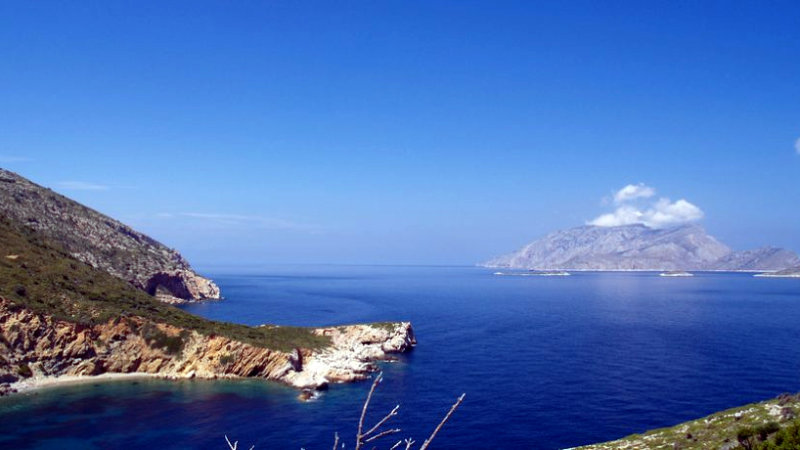
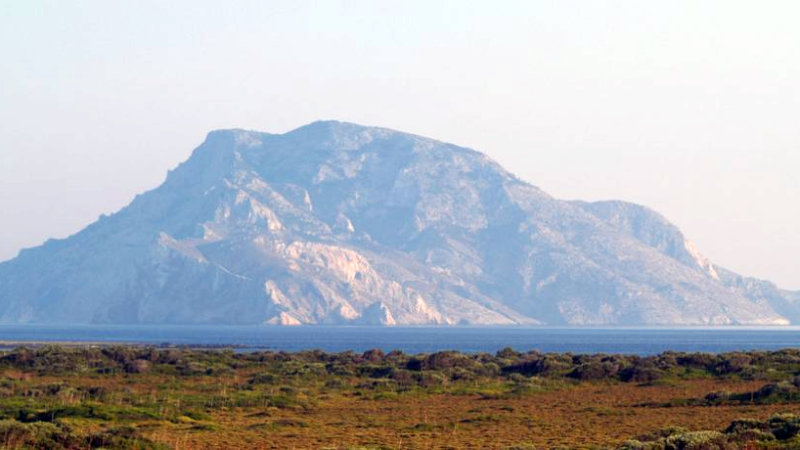

A legendary Marine Park, Greece's first, and the largest protected marine area in Europe. The Alonissos Northern Sporades National Marine Park is a vital refuge for endangered marine species. Besides the marine area, the park includes Alonissos Island, six smaller islands (Peristera, Kyra Panagia, Psathoura, Piperi, Skantzoura, and Gioura), and 22 islets.
The park has significant scientific, educational, and cultural interest, with findings from various periods—prehistoric, classical, and Byzantine. The area also preserves land and underwater monuments: shipwrecks, old monasteries, and churches.
Where public access is allowed, visitors can enjoy numerous activities: swimming, snorkeling, wildlife observation, amateur photography and filming, visits to cultural monuments, and hiking.
Regarding amateur fishing, specific restrictions apply. Hunting is prohibited except on Gioura Island, where special permission is required.
The Monachus monachus Seal
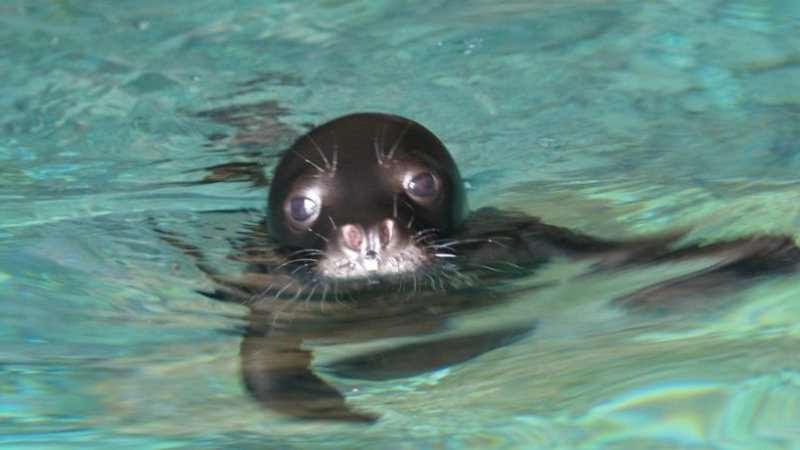
The most famous and beloved creature living in the Alonissos Northern Sporades National Marine Park is the Mediterranean monk seal, Monachus monachus. Its name comes either from the shape of the top of its head, which resembles a Roman Catholic monk's cap, or from its tendency to avoid large groups and human presence. The charming seal is depicted on ancient Greek coins and mentioned in excerpts by the ancient poet Homer, who describes it basking on sandy shores.
Once widespread throughout the Mediterranean, from the Black Sea to the Atlantic coast in Mauritania and Morocco. Due to various factors that had a negative impact on the animals and their habitats, the species became extinct in more than 10 countries. Today, the monk seal is Europe's most endangered species. Approximately 400-500 seals survive today, with two-thirds of the population living in Greece.
It is one of the largest seal species in the world, reaching 2-3 meters in length and an average weight of 250 kg. Increased mortality rates among adults and juveniles are mainly due to human activities. In the past, they were hunted for their fat and skin; today, they are often considered natural competitors by fishermen. Due to overfishing and illegal fishing, which reduce fish stocks, seals sometimes damage nets to "steal" their food. Fortunately, the phenomenon of killing seals by fishermen has diminished in recent years. However, seals continue to get caught in nets and die from drowning.
Another factor in juvenile seal mortality is the loss of suitable habitats. In the past, seals gave birth on sandy beaches and in large caves, but human activities like tourism or harbor and road construction now force them to breed in unsuitable caves. Here, the newborns, inexperienced swimmers in their first weeks of life, can easily get injured or drown due to waves during rough weather conditions
