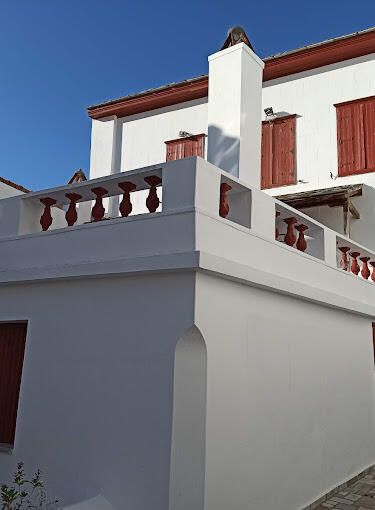
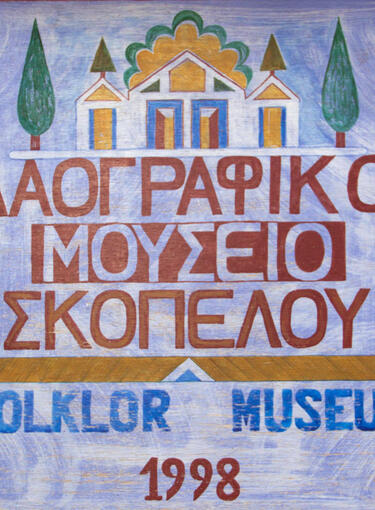
A museum as well as a journey into the past, offering an experiential insight into long-forgotten scenes. This emblematic 18th-century Skopelos mansion in the heart of the town was donated by Antigoni Vakratsa to the Municipality of Skopelos to serve as a museum. It has been preserved in the same form as when it was inhabited. Visitors can admire personal belongings of the family, heirlooms, utensils, icons, paintings, embroideries, decorative items, and 20th-century traditional costumes. One notable room is the surgery (doctor’s room), preserved in its original state, with the medical tools used by doctors from the late 19th to early 20th centuries. Rare books, documents, and photographs of historical interest add to the experience.
The mansion also features a beautiful garden, typical of the era, with a palm tree where cultural events such as book presentations, art exhibitions, lectures, and more are held.
A Historic Family
This 18th-century mansion belonged to Stamatis Vakratsas (1867-1937), a doctor, a Member of Parliament for the Province of Skopelos, and a Senator of Evia. Stamatis Vakratsas married Angeliki Rembaki and had three daughters, among the first Greek women to attend university. The house was passed to his daughter Antigoni, who also became a doctor and even participated in the research team of Alexander Fleming that discovered penicillin. The Vakratsas family had significant connections. The mansion hosted prominent political figures such as Prime Minister Eleftherios Venizelos and military and political leader Nikolaos Plastiras, as well as notable writers like Alexandros Papadiamantis and Kostis Palamas. It is said that secret meetings, negotiations, and discussions that were crucial for the future of the country took place in its dining room.